
Central ERP vs Dynamics
A Business Central alternative without the enterprise project
Looking for a Business Central alternative? Microsoft Dynamics 365 Business Central is part of a broad business applications family and typically involves a partner led implementation. Central ERP is built specifically for SMEs, giving you integrated CRM, inventory, finance and operations with a simpler setup, supported directly by the UK team behind the software.
A Business Central alternative: the key differences
Sized for SMEs
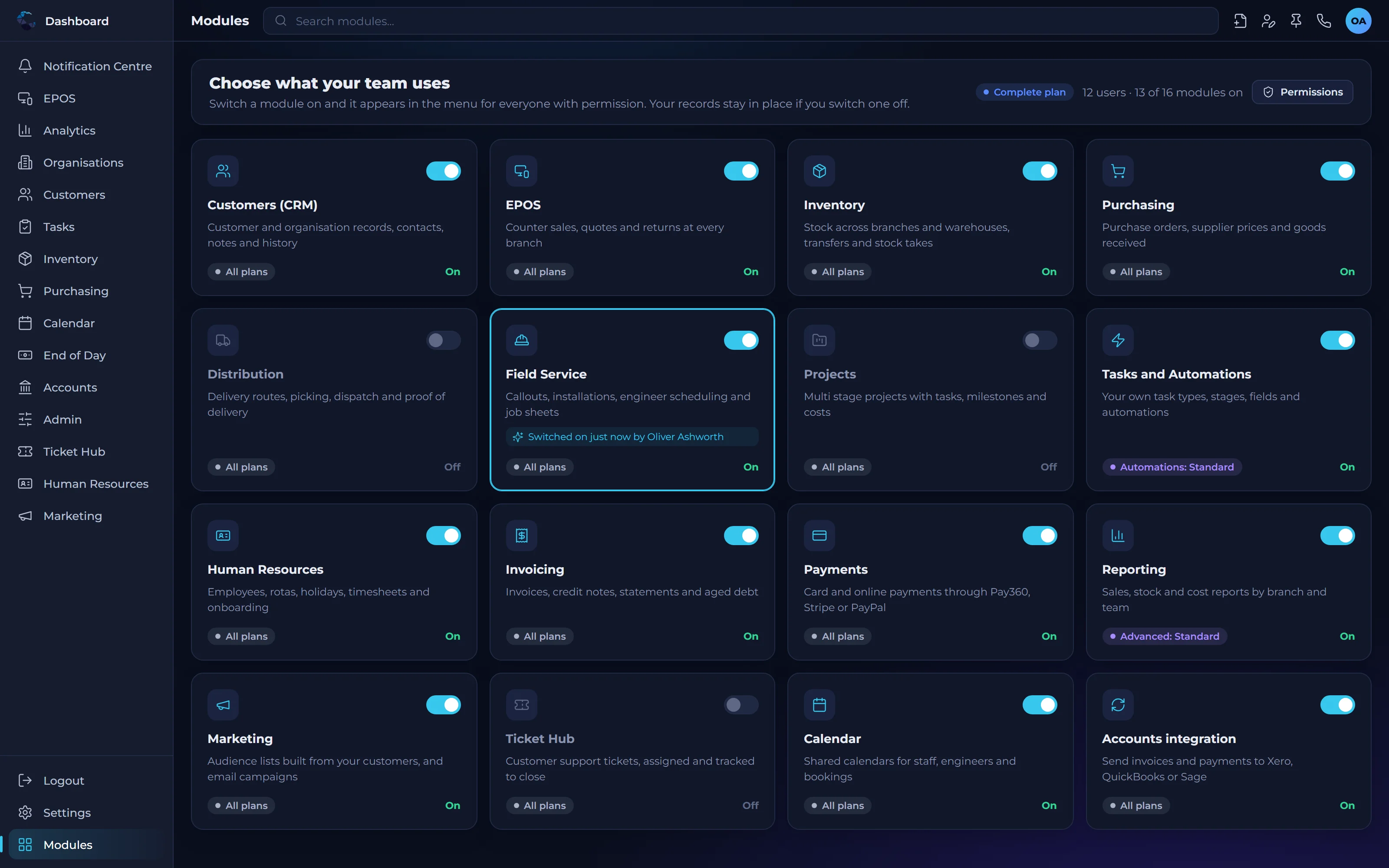
Central ERP is designed for growing businesses, so you avoid enterprise level complexity, licensing structures and project overheads.
Direct from the developer
Our UK team builds, implements and supports Central ERP, so there is no separate partner between you and the software.
Adapts to your processes
Custom task types and condition based automation shape the system around how your business already works.
Central ERP vs Dynamics: pricing
Published list prices as shown by each provider, checked October 2026.
Central ERP
- Free
- £0
- Standard
- £40 per user per month, minimum 5 users
- Complete
- £80 per user per month, minimum 10 users
- Custom
- Priced to your requirements
Custom workflows and UK support from the team that builds it. See full pricing
Dynamics 365 Business Central
- Essentials
- £61.50 per user per month
- Premium
- £84.60 per user per month
- Team Members
- £6.20 per user per month
Per user per month, paid yearly, excluding VAT. Implementation is usually delivered by a Microsoft partner and charged separately.
Licence prices are only part of the cost of Business Central, as most businesses also pay a partner for implementation and configuration. Central ERP setup and support come from our own UK team.
Source: Dynamics 365 Business Central pricing, checked October 2026.
Central ERP and Dynamics 365 compared
| Central ERP | Dynamics | |
|---|---|---|
| Designed for | Growing UK SMEs that have outgrown spreadsheets | A wide range of organisations, from mid sized businesses to large enterprises |
| Product structure | One integrated system with modules you switch on as needed | A family of separate applications that are licensed and combined |
| Implementation | Scoped and delivered by the team that builds the software | Typically delivered through a Microsoft partner |
| Customisation | Custom tasks and automation configured around your processes | Extensive, often requiring partner or developer expertise |
| Field service | Callout and install management included | Available as a separate application |
| Accounting integration | Integrates with Xero, QuickBooks and Sage through APIs | Includes its own finance applications |
| Support | UK support from an established IT partner | Typically through your implementation partner and Microsoft |
Dynamics is a trademark of its respective owner. This comparison reflects our general understanding and published information as at October 2026, and is intended as a guide only. Please check current details with each provider.
Which is the better fit?
Central ERP is likely the right fit if
- You want integrated ERP without a large implementation project
- You prefer to work directly with the people who build the system
- You want to keep Xero, QuickBooks or Sage for your accounts
- You need flexible procedures without bespoke development
Dynamics may suit you if
- You are a larger organisation with complex multinational needs
- You are heavily invested in the wider Microsoft business applications ecosystem
- You have budget and internal resources for a partner led programme
Not sure which is right for you?
Talk it through with our UK team. We will give you a straight answer.
Frequently asked questions
Is Central ERP an alternative to Dynamics 365?
Yes, for SMEs. Central ERP provides integrated CRM, inventory, finance, payroll and field services in one system, built specifically for growing businesses. It suits organisations that want ERP capability without an enterprise scale project, and it is implemented and supported directly by our UK team rather than through a separate partner.
Is Dynamics 365 suitable for growing businesses?
Dynamics 365 can be used by growing businesses, but it is a broad platform that typically involves a partner led implementation. Many SMEs find they need a simpler, integrated system sized for their scale. Central ERP is designed for that middle ground, with faster setup and direct UK support.
How long does ERP implementation take for an SME?
Implementation time depends on the modules you need and how much data you bring across. Central ERP is built for SMEs, so projects are much shorter than enterprise ERP programmes. Our UK team scopes everything with you first, so you know the plan, timeline and responsibilities before work begins.
Can Central ERP work with Microsoft 365?
Central ERP is a cloud system accessed through a web browser, so your team can use it alongside the Microsoft 365 tools they already rely on for email and documents. For specific integration requirements, our UK team will review your setup during scoping and advise on the best approach for your business.
What is Microsoft Dynamics 365 Business Central?
Business Central is Microsoft's ERP application for small and mid sized businesses, covering finance, sales, purchasing and inventory. It is part of the wider Dynamics 365 family and is usually sold, implemented and supported through Microsoft partners. Central ERP offers similar breadth for UK SMEs, delivered directly by the team that builds it.
What is the difference between Business Central and Central ERP?
Both are integrated ERP systems for growing businesses. Business Central includes its own finance applications and is typically delivered through a Microsoft partner, with field service as a separate application. Central ERP includes field service and custom task automation in one system, integrates with Xero, and is implemented and supported directly by our UK team.
Can I move from Business Central to Central ERP?
Yes. Our UK team can scope a move from Business Central, looking at which customer, product and supplier data to bring across and how your processes will work in Central ERP. Typical setup and configuration takes 2 to 4 weeks depending on complexity, followed by training and ongoing UK support.