
Central ERP vs Salesforce
A Salesforce alternative for SMEs: CRM plus the rest of your business
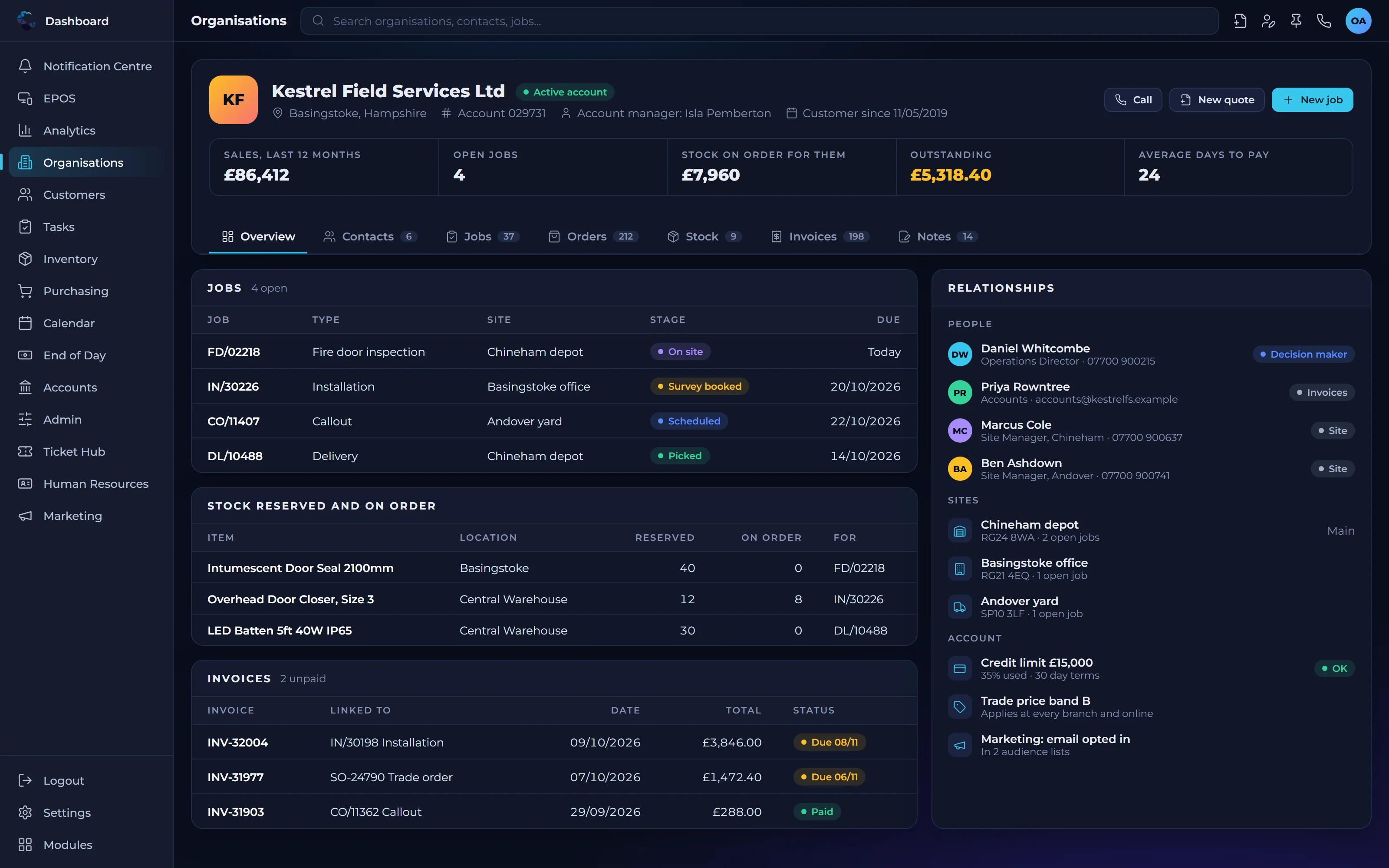
Looking for a Salesforce alternative for SMEs? Salesforce is a well known CRM platform, often extended with add ons and implementation partners. Central ERP takes a different approach for SMEs: customer management is built into one system alongside stock, orders, finance and operations, so you get the full picture without assembling it yourself.
A Salesforce alternative for SMEs: the key differences
One system, not a stack
Central ERP includes CRM, inventory, finance, payroll and field services together, rather than connecting separate products.
Built for SME scale
Designed for growing businesses, so implementation is quicker and you are not paying for enterprise complexity you will not use.
UK partner support
A UK team scopes, implements and supports your system directly, without needing a separate consultancy.
Central ERP vs Salesforce: pricing
Published list prices as shown by each provider, checked October 2026.
Central ERP
- Free
- £0
- Standard
- £40 per user per month, minimum 5 users
- Complete
- £80 per user per month, minimum 10 users
- Custom
- Priced to your requirements
Custom workflows and UK support from the team that builds it. See full pricing
Salesforce Sales Cloud
- Starter Suite
- £20 per user per month
- Pro Suite
- £80 per user per month
- Core
- £156 per user per month
- Advanced
- £316 per user per month
- Max
- £440 per user per month
Per user per month. Pro Suite and above are billed annually.
Salesforce pricing covers CRM. Stock, purchasing, field service and finance typically mean further products, add ons or partner work, whereas Central ERP covers them in one platform.
Source: Salesforce Sales Cloud pricing, checked October 2026.
Central ERP and Salesforce compared
| Central ERP | Salesforce | |
|---|---|---|
| Core focus | Integrated ERP covering customers, operations, finance and people | Primarily a CRM and customer platform |
| Stock and orders | Inventory, purchasing and distribution built in | Typically provided through add ons or integration with a separate ERP |
| Finance and payroll | Financial management and payroll included, with Xero, QuickBooks and Sage integration | Often handled by connecting separate finance software |
| Field service | Callout and install management built in | Available as additional products or add ons |
| Customisation | Custom task types and condition based automation set up around your processes | Highly customisable, often with help from specialist partners |
| Implementation | Scoped and delivered by our UK team, sized for SMEs | Frequently delivered through implementation partners |
| Best suited to | SMEs wanting one system to run the whole business | Organisations whose main priority is an advanced sales and CRM platform |
Salesforce is a trademark of its respective owner. This comparison reflects our general understanding and published information as at October 2026, and is intended as a guide only. Please check current details with each provider.
Which is the better fit?
Central ERP is likely the right fit if
- You need CRM connected to stock, orders, jobs and invoices
- You want one supplier for the whole system rather than several
- You prefer a quicker, SME sized implementation
- You value direct UK support from the team that builds the software
Salesforce may suit you if
- Your priority is a highly advanced sales and marketing platform
- You have the budget and resources for partner led customisation
- You already run a separate ERP and only need CRM
Not sure which is right for you?
Talk it through with our UK team. We will give you a straight answer.
Frequently asked questions
Is Central ERP a Salesforce alternative?
Yes, for SMEs that want more than CRM. Central ERP includes Customer Record Management within one system that also covers inventory, orders, finance, payroll and field services. Rather than extending a CRM with add ons and partners, you get an integrated platform built for growing businesses, with UK support from our own team.
What is the difference between Salesforce and ERP?
Salesforce is primarily a CRM platform focused on sales, marketing and customer service. ERP manages the wider business, including stock, purchasing, finance and operations. Central ERP combines both, so customer records connect directly to what has been ordered, delivered and invoiced without linking separate systems together.
Is Salesforce too complex for a growing business?
It depends on what you need. Salesforce is powerful and highly customisable, which can suit businesses focused on advanced sales processes. Many SMEs, however, need CRM connected to stock, jobs and finance rather than a standalone platform. Central ERP is built for that scale, with simpler implementation and UK support.
Can I move from Salesforce to Central ERP?
Yes. Our UK team can scope a move from Salesforce, including which customer data to bring across and how your sales processes will work in Central ERP. We look at how you operate today first, so the new system fits your business and your team knows what to expect before go live.
Does Central ERP include CRM features like Salesforce?
Central ERP includes Customer Record Management, which keeps customer details, contacts and history in one place, linked to their orders, invoices and jobs. You can also create your own task types, stages and condition based automations, so sales follow ups and approvals run the way your team already works, without separate add ons.
How much does a Salesforce alternative for SMEs cost?
Central ERP is priced per user per month: a Free plan to get started, Standard at £40 and Complete at £80, excluding VAT, plus Custom plans for specific requirements. Because CRM sits in the same system as stock, orders and finance, you are not paying to connect separate products for each part of the business.
What is the best CRM for an SME that sells stock?
Usually a CRM that is part of an ERP system, so customer records link directly to stock, orders and purchasing. Standalone CRM platforms need connecting to separate inventory software. Central ERP combines Customer Record Management with inventory management in one system, so your sales team can check live stock before promising a delivery date.