
For Finance
ERP for finance teams that want accurate numbers, faster
Central ERP is ERP for finance teams who spend too much time rekeying data and reconciling figures from different systems. Sales, purchasing, stock and payroll all feed one set of records, so your numbers are accurate as they happen and month end becomes a check rather than a scramble.
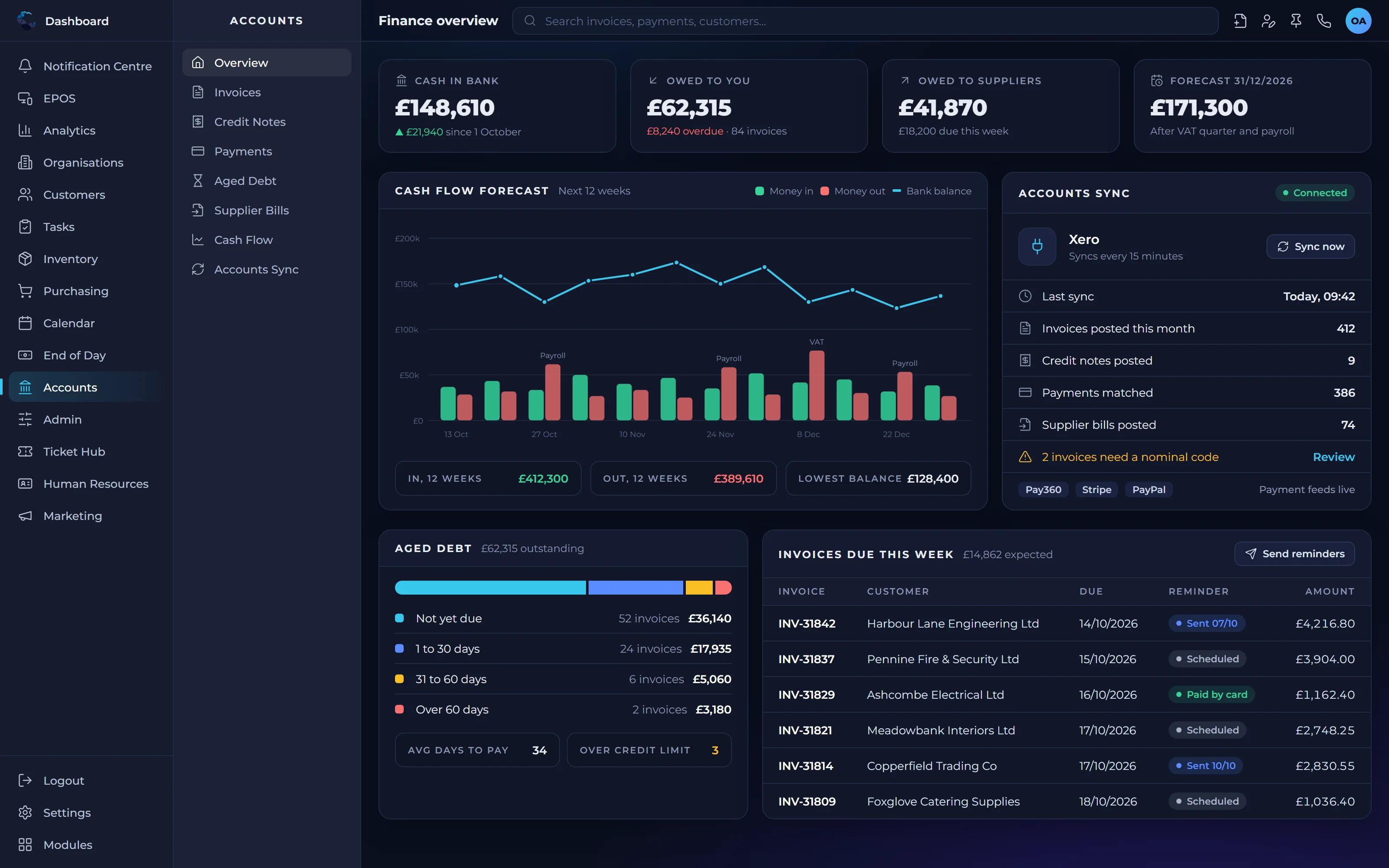
How ERP for finance teams saves time every month
No more double entry
Invoices, purchases and payments flow from the operational records that created them, so your team stops copying figures between systems.
A faster month end
With transactions recorded and matched as they happen, closing the month becomes a matter of review rather than days of reconciliation.
Tighter cash control
See what is owed, what is due and what has been paid in one view, so you can chase debts sooner and plan cash with confidence.
Keep your accounts package
Central ERP integrates with Xero, QuickBooks and Sage through their APIs, so your accountants keep working in the software they know.
Approvals built in
Set conditions such as spending limits so purchases above a value need sign off before they go ahead, with a clear record of who approved what.
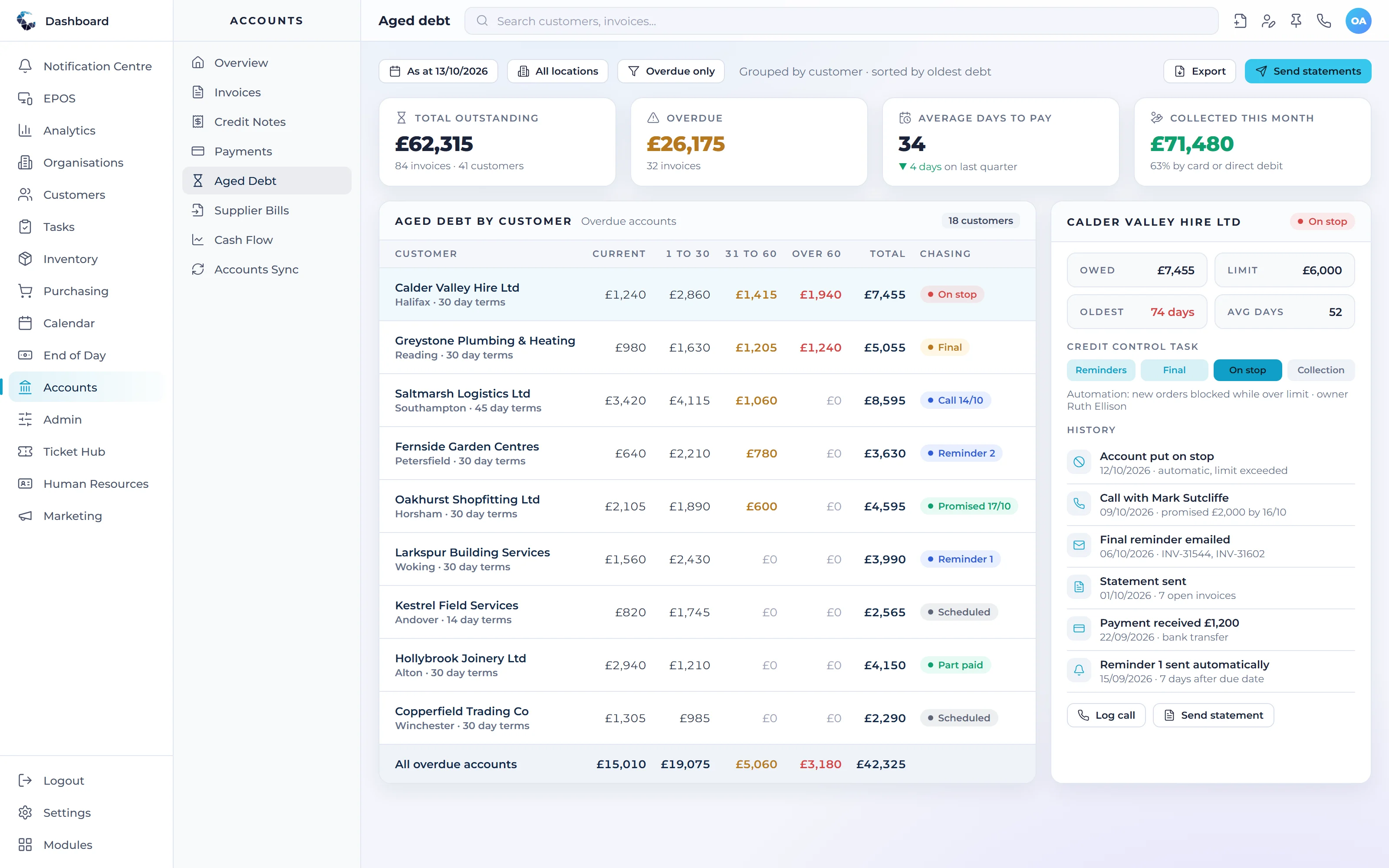
The modules that matter most to you
Central ERP brings these together in one system, so your team works from the same live figures as everyone else.
- Financial ManagementInvoicing, cash and financial control in real time
- PaymentsTrack what is owed and paid against every invoice
- PayrollAccurate pay runs linked to your people records
- Reporting & Business IntelligenceLive dashboards and reports across the business
- Order & Procurement ManagementPurchasing and supplier orders under control
See Central ERP working for your business
A tailored demo, built around your processes, with no obligation.
Frequently asked questions
What does ERP do for a finance team?
ERP gives a finance team one connected record of every sale, purchase, payment and pay run. Because figures come straight from the operational activity that created them, there is far less rekeying and reconciliation. The result is accurate live numbers, a faster month end and better control over cash and spending.
Can ERP work alongside Xero, QuickBooks or Sage?
Yes. Central ERP integrates with Xero, QuickBooks and Sage through their APIs. Your finance team and accountants keep using the package they trust for the books, while sales, stock, jobs and purchasing run in Central ERP. Data flows across automatically, removing double entry between the two systems.
How does ERP speed up month end close?
ERP speeds up month end by recording and matching transactions as they happen rather than at the end of the period. Sales, purchases and stock movements are already linked to the right records, so your team reviews and adjusts instead of hunting for missing information across spreadsheets and separate systems.
Can ERP help control business spending?
Yes. Central ERP lets you set approval rules, such as requiring sign off for purchases above a set value, and records who approved each one. Combined with live visibility of committed spend and outstanding invoices, finance teams can control costs before they are incurred rather than after the money has gone.
Is financial data secure in cloud ERP?
Central ERP is hosted on Microsoft Azure in European data centres, with role based access set by user, role, location and department. Finance teams can restrict who sees payroll, margins and other sensitive figures, so financial information is visible only to the people who genuinely need it.
Does ERP replace the need for an accountant?
No. ERP keeps accurate, connected records of sales, purchases, stock and payroll, but you still need an accountant for tax, statutory accounts and advice. What changes is the quality of what they receive: cleaner data, fewer queries and, with Central ERP's Xero integration, figures that arrive without rekeying.
Can ERP for finance teams produce live financial reports?
Yes. Reporting & Business Intelligence in Central ERP draws on the records that sales, purchasing, stock and payroll create every day, so reports on revenue, margin, spending and money owed are current rather than weeks old. Finance teams can review performance mid month instead of waiting for the close.