
For Management
ERP for business owners who want the full picture
Central ERP is ERP for business owners and managing directors who are tired of chasing reports. Sales, stock, cash, people and jobs sit in one system, so you can see how the business is really performing today and make decisions with confidence rather than gut feel.
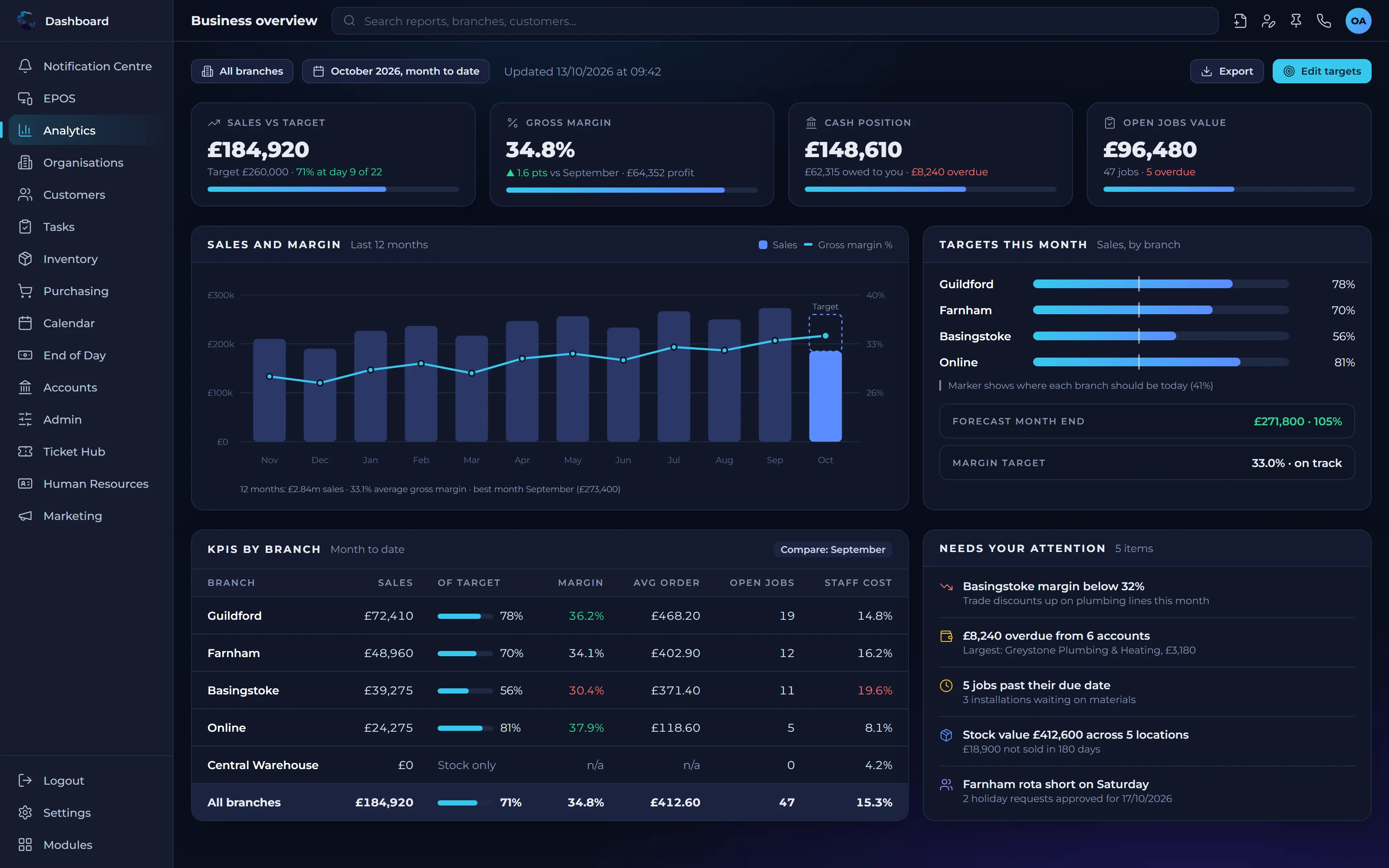
What ERP for business owners should give you
One version of the truth
Every department works from the same live data, so the figures you see in a meeting match the figures your team sees on screen.
Decisions on today's numbers
Live dashboards show revenue, margin, stock and cash as they move. You stop waiting for month end to find out what happened.
Less reliance on key people
Processes are captured in the system rather than in one person's head, which protects the business when people are away or move on.
Growth without replatforming
Add modules, users and sites as you expand. The system grows with you, so you avoid another costly software change in a few years.
A partner you can call
A UK team scopes your requirements, supports implementation and stays with you afterwards, so you are never left to work it out alone.
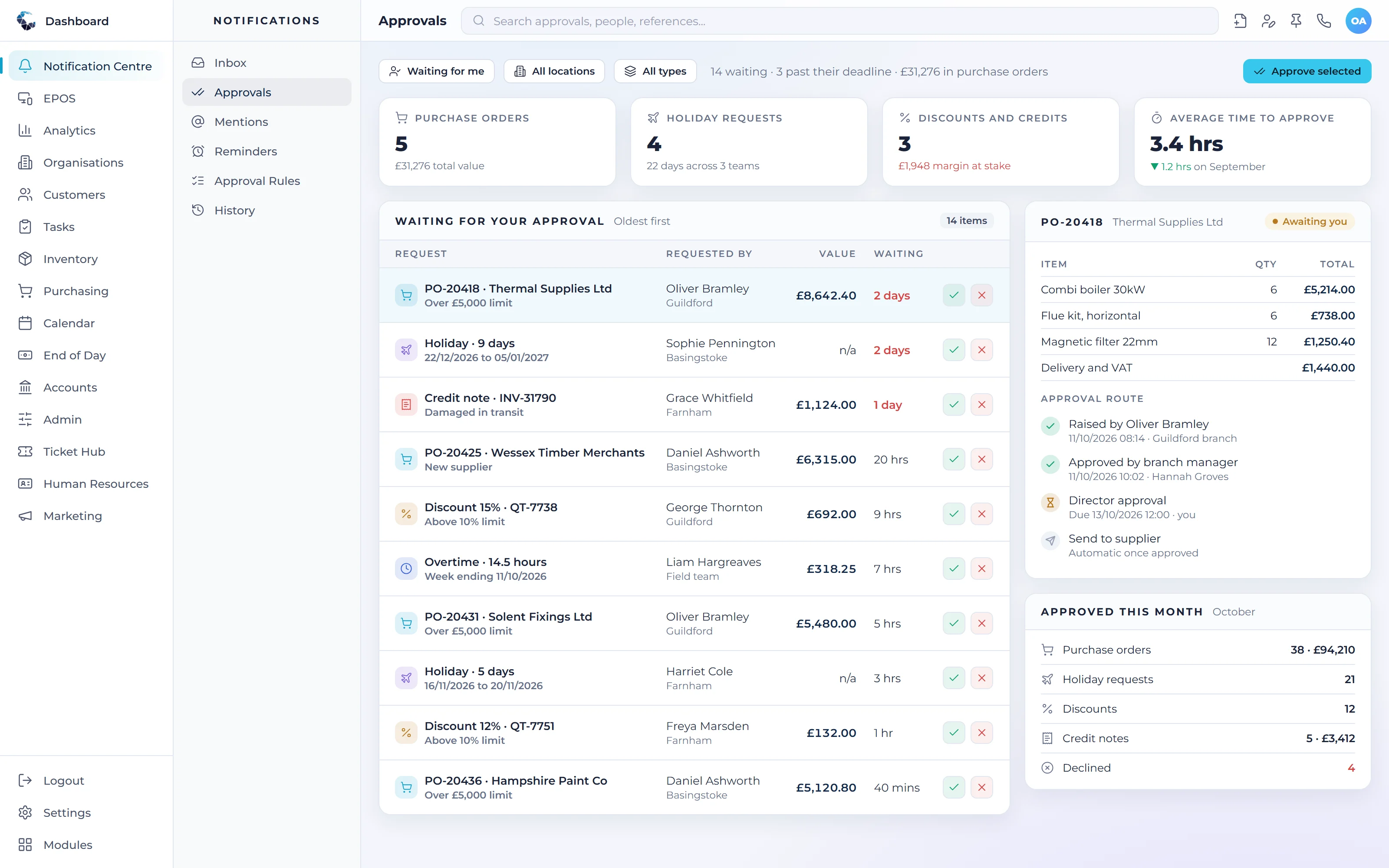
The modules that matter most to you
Central ERP brings these together in one system, so your team works from the same live figures as everyone else.
- Reporting & Business IntelligenceLive dashboards and reports across the business
- Financial ManagementInvoicing, cash and financial control in real time
- Customer Record ManagementEvery customer, contact and conversation in one place
- Custom Tasks & AutomationDefine your own procedures and automate them
- Project ManagementPlan, assign and track work from start to finish
See Central ERP working for your business
A tailored demo, built around your processes, with no obligation.
Frequently asked questions
Why do business owners need an ERP system?
Business owners need an ERP system to see the whole business in one place. Instead of piecing together spreadsheets and separate apps, you get live figures for sales, stock, cash and jobs. That means faster, better informed decisions, fewer errors and less time spent chasing information from different people.
Is ERP worth it for my business?
ERP is worth it for a business once spreadsheets and disconnected tools start costing more time than they save. Signs include rekeying data, stock that never matches, slow reporting and processes that depend on one person. A system built for SMEs gives you control without enterprise cost or complexity.
How long does it take to implement ERP in an SME?
Implementation time depends on the modules you need and how much data you are bringing across. Because Central ERP is built for SMEs, projects are far shorter than enterprise ERP rollouts. Our UK team scopes the work with you first, so you know the plan, timings and responsibilities before anything starts.
Can I see business performance without waiting for reports?
Yes. Central ERP shows live dashboards for sales, margin, stock, cash and jobs, built from the same data your team uses every day. You no longer wait for someone to compile a monthly report, and you can drill into the detail behind any figure whenever you need to understand what is driving it.
Can I try ERP for free before committing?
Yes. Central ERP has a free plan for up to 50 customers, 50 sales a month, 100 products, 2 locations and 2 custom task types. It lets a business owner see how connected records work in practice, then move to a paid plan when the business needs more capacity.
How much does ERP cost for my business?
Central ERP's paid plans are Standard at £40 and Complete at £80 per user per month, excluding VAT, with custom plans for more complex needs. For business owners, per user pricing means costs are predictable and rise only as the team grows, without large upfront licence fees.
How does ERP reduce reliance on key staff?
ERP reduces reliance on key staff by recording processes in the system rather than in people's heads. In Central ERP you define your own task types, stages and automations, so steps for quoting, ordering or onboarding are followed the same way whoever does the work, and absences cause less disruption.