
For Operations
ERP for operations managers who need things to run smoothly
Central ERP is ERP for operations managers responsible for getting orders out, jobs done and stock right. Orders, inventory, purchasing, scheduling and field work share one system, and your own procedures are built in as automated tasks, so the right thing happens at the right time without constant chasing.
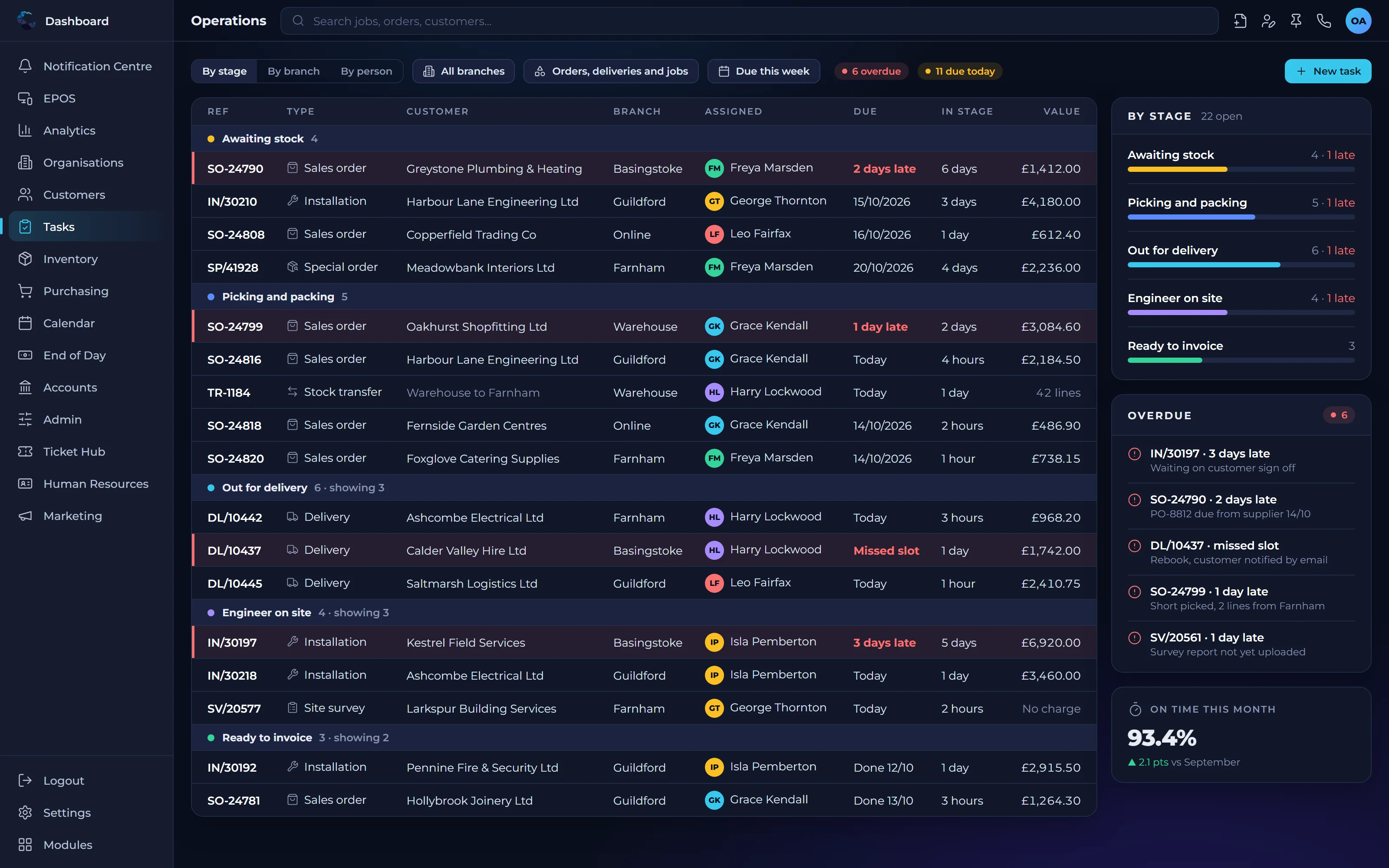
What ERP for operations managers changes day to day
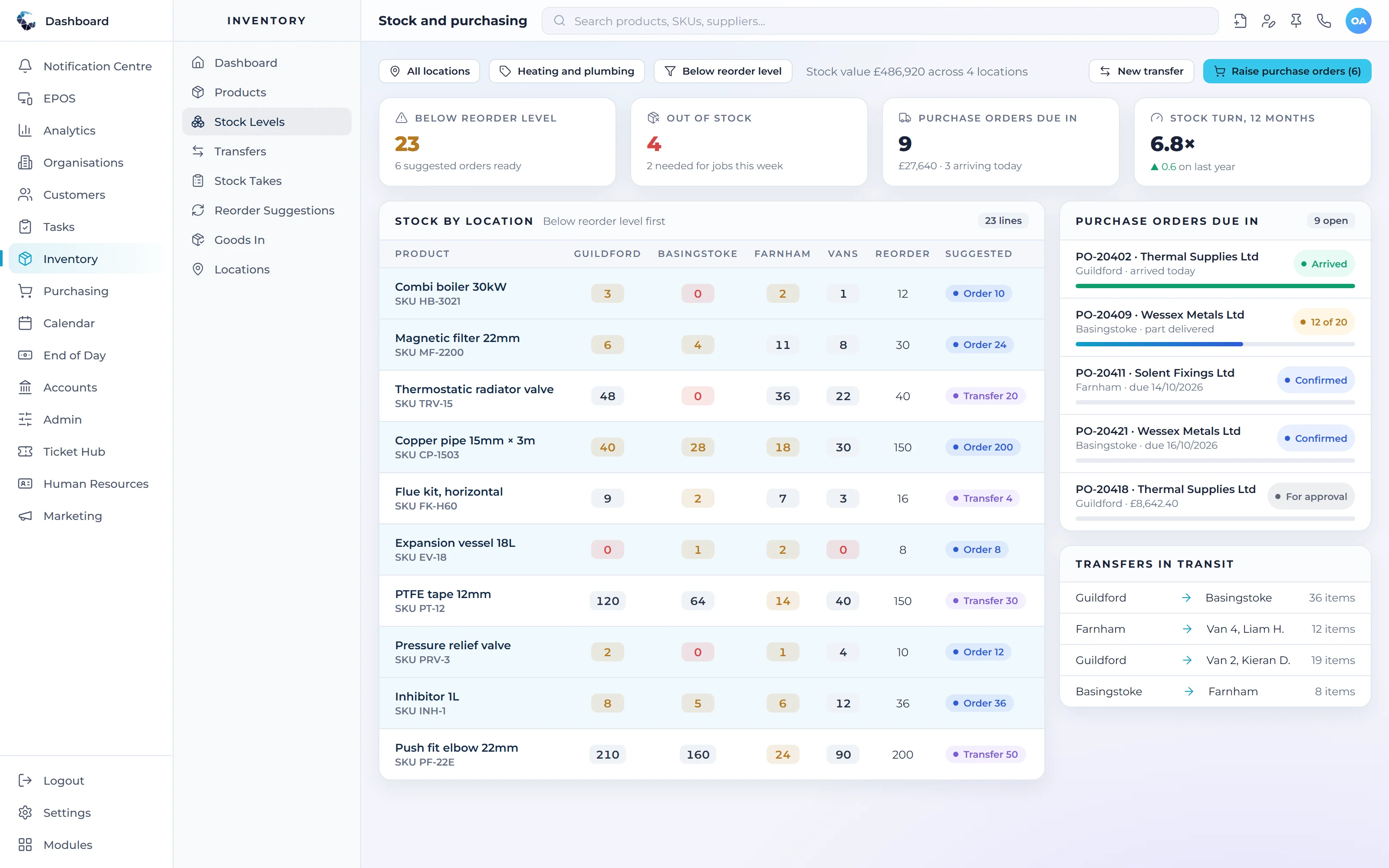
Accurate stock, always
Stock levels update as items are sold, received and moved, so you plan with real figures across every location.
Your procedures, automated
Define the tasks your sector requires, such as inspections or sign offs, and set conditions that trigger the next step automatically.
Fewer handover errors
Orders, jobs and purchases move between teams in one system, so nothing is lost when work passes from one person to another.
Clear view of workload
See what is scheduled, in progress and overdue across teams and sites, and spot bottlenecks before they affect customers.
Better supplier control
Raise and track purchase orders against real demand, so you reorder at the right time and avoid both shortages and overstocking.
The modules that matter most to you
Central ERP brings these together in one system, so your team works from the same live figures as everyone else.
- Inventory ManagementAccurate stock levels across every location
- Order & Procurement ManagementPurchasing and supplier orders under control
- Distribution ManagementPick, pack and deliver orders on time
- Field Service ManagementSchedule callouts and installs, and close jobs faster
- Custom Tasks & AutomationDefine your own procedures and automate them
- Manufacturing ManagementPlan production and track materials end to end
See Central ERP working for your business
A tailored demo, built around your processes, with no obligation.
Frequently asked questions
How does ERP help operations managers?
ERP helps operations managers by connecting orders, stock, purchasing and scheduling in one system. Everyone works from the same live information, so handovers are smoother, stock is accurate and delays are spotted early. Automated tasks make sure required steps happen in the right order without someone having to chase them.
Can ERP automate operational processes?
Yes. Central ERP includes a custom task engine where you define your own procedures, then set conditions that trigger automated workflows. For example, an inspection must be completed before dispatch, or a follow up is created after every install. You set the rule once and the system makes sure it happens.
How does ERP improve stock accuracy?
ERP improves stock accuracy by updating inventory every time items are sold, received, moved or used. Because sales, purchasing and warehouse activity all share one system, there is no gap between what the records say and what is on the shelf, and you can see levels across every location at once.
Can ERP manage multiple sites or warehouses?
Yes. Central ERP tracks stock, orders and activity across multiple locations in one system. You can see what is held where, move stock between sites and plan fulfilment from the best location. The number of locations available depends on your plan, and our team can advise on the right fit.
How long does it take to roll out ERP for operations managers?
Typical setup and configuration of Central ERP takes two to four weeks, depending on the number of sites, processes and modules involved. Our UK team maps how your operation runs today, configures stock, orders and automated tasks to match, then trains your team and supports you after go live.
Can ERP help manage field engineers and installs?
Yes. Central ERP includes Field Service Management for scheduling callouts and installs, connected to the same stock, orders and customer records as the rest of the business. Operations managers can see which jobs are booked, in progress or overdue, and automated tasks can trigger follow ups once work is complete.
Can ERP help with purchasing decisions?
Yes. Order & Procurement Management lets you raise and track purchase orders against live stock and sales, so you can see what is needed before it runs out. Approval rules can apply to orders above a set value, helping you avoid both shortages and money tied up in excess stock.