
For Sales & Marketing
ERP with CRM for sales teams that need the whole customer picture
Central ERP is ERP with CRM built in, for sales teams and marketers who need more than a standalone CRM. Customer records connect directly to quotes, orders, stock and invoices, so your team can see what a customer has bought, what is available to sell and what is outstanding, all without leaving the system.
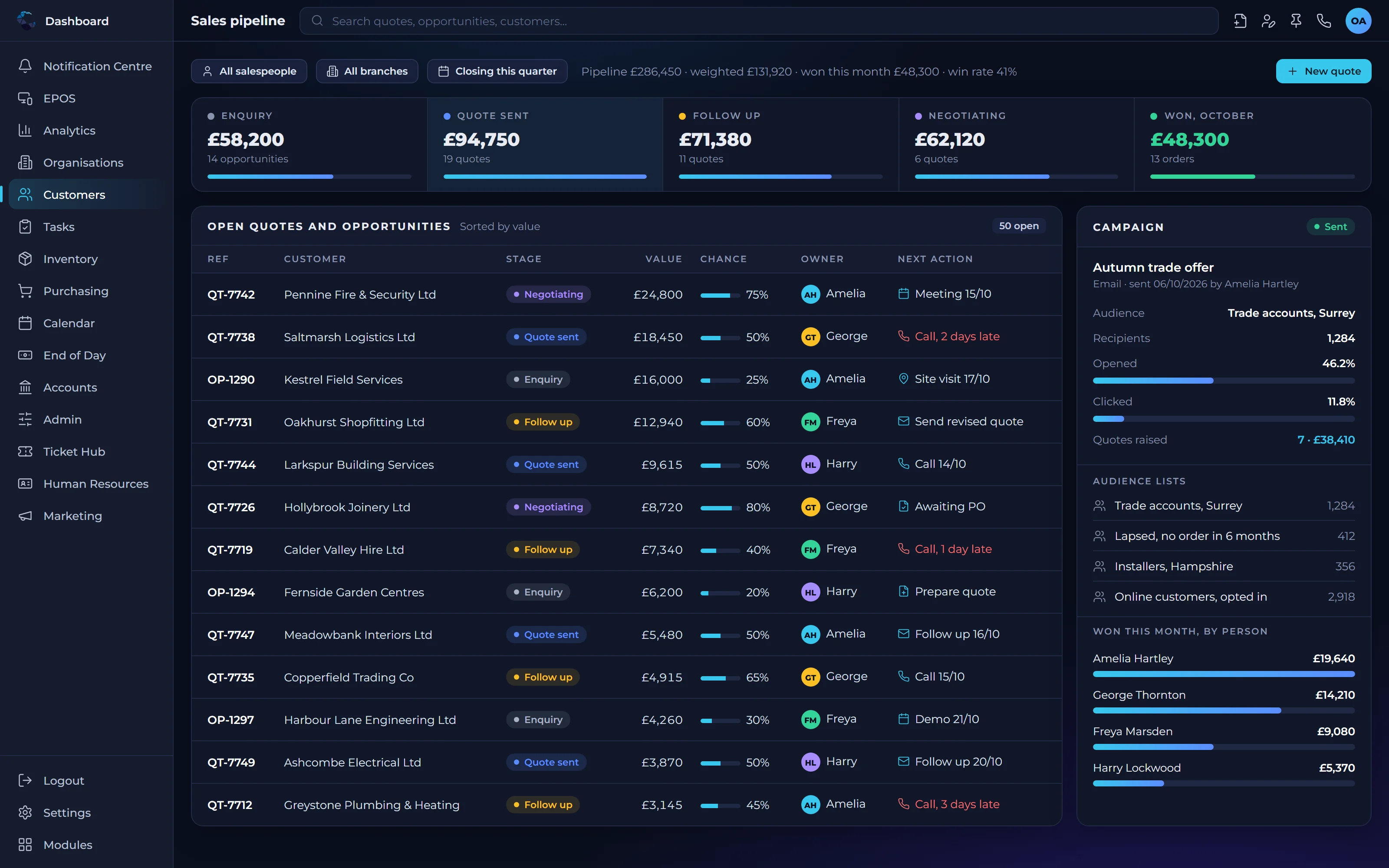
How ERP with CRM helps you win and keep customers
A complete customer view
See contacts, conversations, orders, invoices and service history together, so every conversation starts with the full context.
Quote with confidence
Check live stock and pricing before you commit, so you promise only what the business can deliver.
Follow ups that happen
Automated tasks prompt the next action after a quote, order or install, so opportunities do not slip through the gaps.
Insight for targeting
Reports show who buys what and how often, helping marketing focus campaigns on the customers and products that matter most.
Sell in store and online
Point of sale and ecommerce share the same customer and stock records, giving one view of every channel.
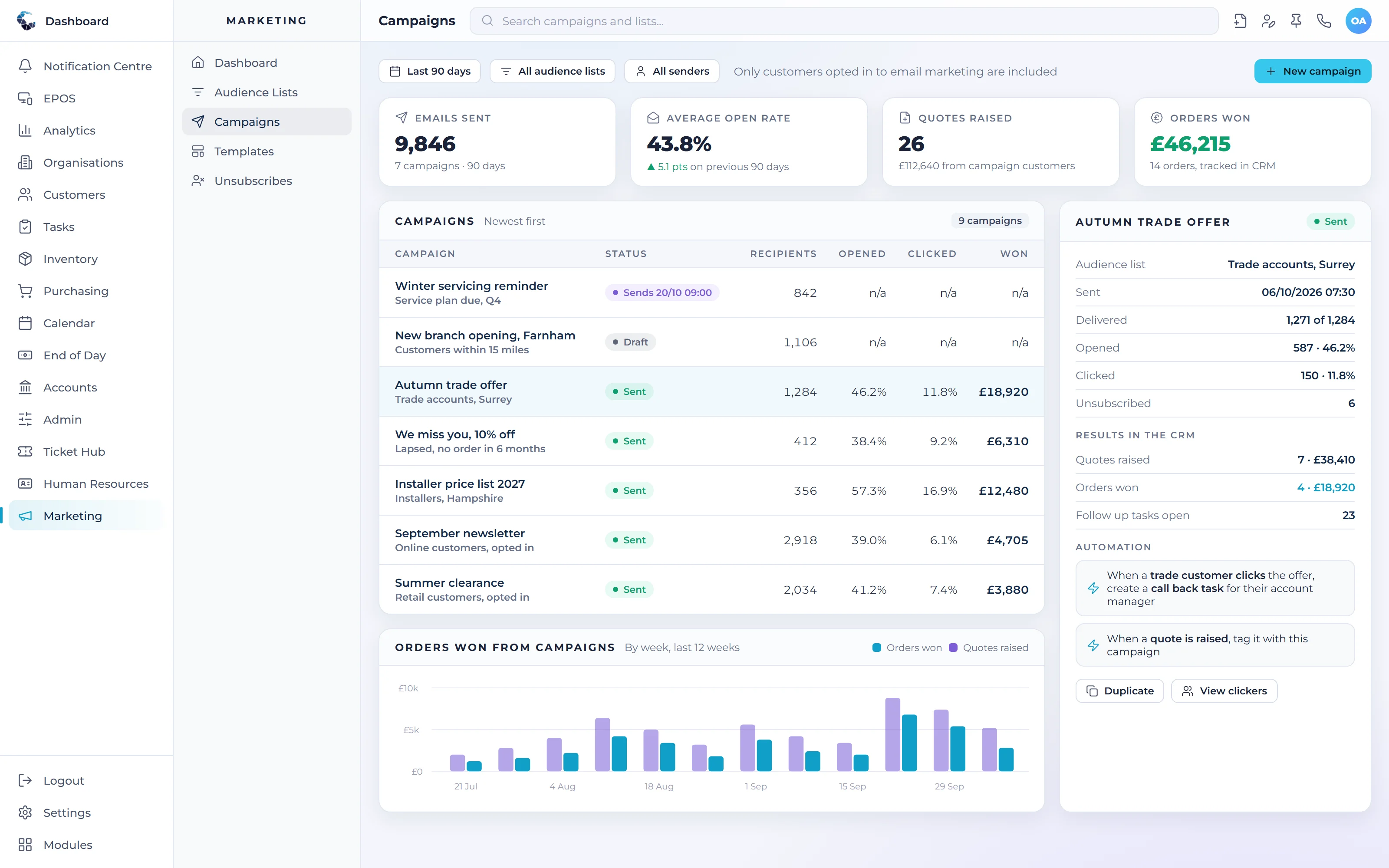
The modules that matter most to you
Central ERP brings these together in one system, so your team works from the same live figures as everyone else.
- Customer Record ManagementEvery customer, contact and conversation in one place
- EcommerceSell online from the same stock and price lists
- Point of Sale (POS)Fast checkout connected to live stock and accounts
- Reporting & Business IntelligenceLive dashboards and reports across the business
- Custom Tasks & AutomationDefine your own procedures and automate them
See Central ERP working for your business
A tailored demo, built around your processes, with no obligation.
Frequently asked questions
What is the difference between CRM and ERP?
CRM manages customer relationships, such as contacts, conversations and sales opportunities. ERP covers the wider business, including stock, orders, finance and operations. Central ERP includes Customer Record Management as part of the same system, so customer information connects directly to what has been sold, delivered and invoiced.
Can sales teams see stock levels in ERP?
Yes. In Central ERP, sales teams see live stock levels alongside customer records and pricing, so they can check availability before quoting or taking an order. This avoids promising stock that has already been sold and gives customers accurate delivery expectations from the very first conversation.
How does ERP help with sales follow ups?
ERP helps with follow ups by creating tasks automatically when something happens, such as a quote being sent or an order being delivered. In Central ERP you set the conditions once, and the system prompts the right person at the right time, so no customer is forgotten and opportunities are not lost.
Can ERP support marketing decisions?
Yes. Because Central ERP holds customer, order and product data in one place, reports can show which customers buy what, how often and through which channel. Marketing teams use this insight to target campaigns, spot customers who have stopped ordering and focus effort on the products that drive the most value.
Is ERP with CRM better than a standalone CRM?
Often, yes, if your sales team needs to see stock, orders and invoices. A standalone CRM holds contacts and opportunities but not what the business can deliver. ERP with CRM connects both, so sales staff see what customers have bought, what is available and what is outstanding in one place.
How much does ERP with CRM cost?
Central ERP, which includes Customer Record Management, has a free plan, then Standard at £40 and Complete at £80 per user per month, excluding VAT. Custom plans are available for more complex needs. You get CRM connected to stock, orders and finance without paying for a separate CRM subscription.
Can ERP with CRM track customers who buy in store and online?
Yes. In Central ERP, Point of Sale and Ecommerce share the same customer and stock records as the CRM. A customer's purchases in store and online sit in one history, giving sales and marketing teams a single view of how each customer buys across every channel.